
Exploring 11 Types Of Cosmetic Dentistry Procedures
Quick Summary
Popular options range from whitening and bonding to veneers, aligners, and implants, and all 11 are covered below. Whitening and bonding suit minor concerns, while veneers, crowns, and aligners address shape, strength, and alignment. Implants replace missing teeth, and gum contouring balances a gummy smile. The best choice depends on your goals, oral health, and budget, which a personalized consultation with digital planning helps clarify before any treatment begins.
Anyone who has stood at a bathroom mirror wondering whether a chipped edge or a slightly yellow shade is worth fixing will find that the types of cosmetic dentistry available today reach well past whitening, since a dentist can now adjust the color, shape, and position of your teeth and even the proportions of your gum line. At Edgemont Dental Arts, we plan each case slowly and in some detail, so the result looks like your own smile on a good day and the visits themselves stay comfortable.
Below we go through eleven procedures, saying what each one does, roughly how it is carried out, and which kind of patient usually ends up happiest with it, so that you can arrive at your consultation already knowing which questions to ask.
What to Consider Before Choosing Cosmetic Dentistry
Before settling on any one of these treatments, it helps to sit down with a pen and list what actually bothers you about your smile, because a person who dislikes a single darkened front tooth needs a very different plan from someone who is unhappy with small gaps, worn edges, and a gum line that sits unevenly. Some patients arrive convinced they need veneers when a short bonding repair would solve the problem, and for others the reverse is true, which is why naming your main concern first narrows the field faster than browsing photographs.
Our first step is always a look at the health underneath, meaning your teeth, gums, bite, and any fillings or crowns already in your mouth, since an untreated cavity or a patch of inflamed gum tissue will undermine even beautifully made cosmetic work and can cause trouble a few months after treatment. When something like that turns up, we usually deal with it first and plan the cosmetic work around it, which tends to give longer-lasting results than rushing straight to the visible part.
Upkeep, lifespan, and cost deserve a place in the decision too, because whitening fades and may need touch-ups every so often, veneers and crowns last longest when you keep up daily brushing and your routine exams, and some choices, such as enamel reshaping, cannot be undone once the tooth has been altered, while others, such as bonding, can be redone or refined later on.
At Edgemont Dental Arts we talk through these trade-offs before anything is scheduled, laying out what each option can realistically do for you and where its limits are, so that the plan you leave with fits your goals, your oral health, and your budget rather than a template.
1. Teeth Whitening
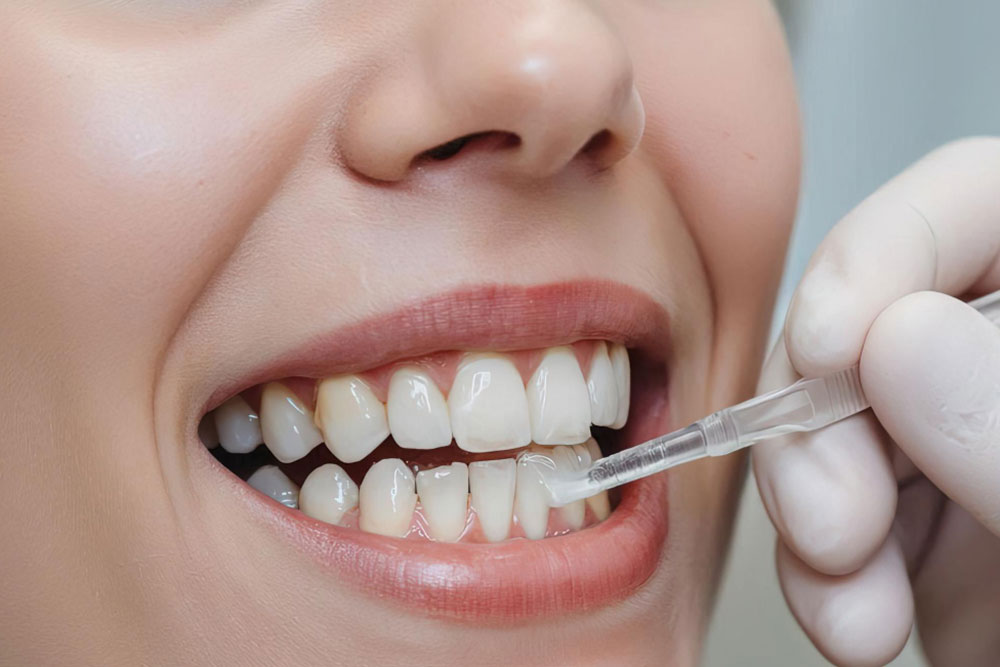
Professional whitening lifts the stains that build up from coffee, tea, red wine, and simply getting older, and because it removes nothing from the tooth, it is among the gentlest changes we can make, often brightening a smile by several shades in a single visit. When the staining sits deeper inside the tooth, as it can with discolored teeth that have darkened from within or have never responded well to bleaching, we may steer you toward veneers or bonding instead, since whitening gel can only do so much against that kind of color.
2. Porcelain Veneers
A veneer is a thin shell of porcelain, custom-made in a dental laboratory and bonded to the front of a tooth, and because one set can hide chips, small gaps, uneven shapes, and stubborn stains all at once, veneers are the usual choice when someone wants several things changed together. Porcelain bounces light in much the same way natural enamel does and resists everyday staining, which explains why patients who want a refined, long-lasting result so often ask about them.
3. Dental Bonding
Bonding uses a tooth-colored resin that we shape by hand on the tooth and harden with a curing light, so minor chips, narrow gaps, and slightly uneven edges can often be repaired in one appointment without any laboratory work. It is practical and generally the most economical route, although the resin tends to pick up stains and wear down sooner than porcelain does, and that trade-off is worth knowing about before you choose it.
4. Dental Crowns
A crown covers a tooth that is weak, heavily filled, or misshapen, rebuilding both its strength and its outline in a single restoration, and porcelain crowns are color-matched to the teeth beside them so that nobody can tell which one was repaired. Because a crown that fits poorly will feel wrong every time you bite down, we put our effort into getting the fit exact, and many crowns can be finished on the same day.
5. Clear Aligner Orthodontics
Clear aligners move teeth into better positions through a series of nearly invisible plastic trays, each worn for a set period before the next one takes over, which makes them a natural fit for adults who want straighter teeth without the wires and brackets of traditional braces. You take the trays out to eat and to brush, so daily cleaning stays as simple as it was before treatment, and the process fits into a working week without much fuss.
6. Gum Contouring
The shape of the gum line affects how a smile looks more than most people realize, and when too much gum shows or the edge sits unevenly across the front teeth, gentle reshaping can bring the teeth into better proportion with the tissue around them. People who are bothered by a gummy smile, in particular, tend to ask about this procedure, and healing is usually quick because very little downtime is involved.
7. Dental Implants
A missing tooth is a restorative problem and a cosmetic one as well, since the bone beneath the gap slowly shrinks and gives the face a sunken look over time, which is exactly what an implant helps prevent: a titanium post is anchored in the jaw and topped with a custom crown that looks, feels, and works like a natural tooth. After ten years in practice with a specialty focus, we place dental implants with a painless, comfortable approach, and sedation is available for patients who would like it.
8. Enamel Contouring
Enamel contouring removes a very small amount of enamel to smooth out slight irregularities such as a pointed canine or a minor overlap between two front teeth, and because the change is so small it is usually quick and comfortable. It works well on its own for minor concerns and can also be combined with other treatments when we want to refine the overall balance of your smile.
9. Tooth-Colored Fillings
Silver fillings placed years ago tend to darken over time and can show when you laugh or smile widely, and replacing them with tooth-colored composite lets the filling blend into the surrounding enamel while bonding directly to the tooth. The restoration works just as well as the old one, only with a more even appearance.
10. Inlays and Onlays
Inlays and onlays sit between a filling and a crown in scope, and we use them for teeth with moderate damage that is too extensive for a simple filling but does not justify removing as much structure as a full crown requires. Because they preserve more of the natural tooth while still giving strong support and a close color match, they appeal to patients who want durable results with the most conservative approach possible.
11. Full Smile Makeover
A smile makeover combines several of the treatments above into one coordinated plan built around your face, your goals, and the condition of your mouth, and it might include whitening, veneers, aligners, and gum contouring arranged in the order that gives the best result. If you would like to picture what that could look like for someone in your position, you can browse real before-and-after cases in our smile gallery.
Choosing the Right Procedure
Choosing among the different types of cosmetic dentistry starts with being honest about your priorities, the health of your teeth, and what you are comfortable spending, and since you might want to brighten stained teeth, repair a chip, close gaps, improve alignment, or deal with several of these at once, the best match depends on both the changes you hope for and how your teeth and gums are doing today.
At Edgemont Dental Arts we begin with a thorough exam and an unhurried conversation about what you would like to change, and we look closely at your bite, enamel, gum health, and existing restorations before suggesting options. If cavities, gum disease, or another problem turns up along the way, that gets treated before the cosmetic work starts.
We rely on our advanced dental technology to examine your teeth accurately and plan each step with care, and we explain the results you can expect, how long treatment will take, what upkeep it involves, and any limitations, so that the decision you make is an informed one.
Begin Your Smile Transformation
Your best smile may be closer than you think, and a first conversation is an easy way to find out what is possible. Patients who choose cosmetic dentistry in Montclair, NJ at our practice get careful, patient work in a calm and welcoming setting, with sedation available for anyone who feels nervous in the chair. When you are ready, plan your first visit with us, and we will help you build a treatment plan that suits your life.
FAQs
Which procedure is best for a single chipped tooth?
For a minor chip, bonding is often the simplest solution because it can usually be done in a single visit, whereas a larger break might call for a veneer or a crown to restore both the shape and the strength of the tooth. We aim to recommend the most conservative option that will still hold up well over time.
How long do porcelain veneers last?
With good oral hygiene and regular checkups, porcelain veneers frequently last a decade or longer, though the exact figure depends on your bite and habits. Chewing ice, biting hard objects, or grinding your teeth at night can chip them, so we may suggest a night guard if grinding is a concern.
Is cosmetic dentistry covered by insurance?
Treatments that are purely cosmetic are generally not covered by dental insurance, although a procedure that also restores function, such as a crown on a cracked tooth, may qualify for partial coverage depending on your plan. We go over your options plainly before you commit and can talk through financing options so treatment stays within reach.
Are cosmetic procedures painful?
Most cosmetic procedures cause little or no discomfort, and the ones that involve more work are done with numbing so you do not feel the treatment itself. If dental visits make you anxious, sedation options are available so you can relax throughout.
Can I combine multiple procedures?
Yes, and many patients do, for example whitening before veneers, or aligners followed by gum contouring. We plan the order carefully so that each step prepares the ground for the next one.